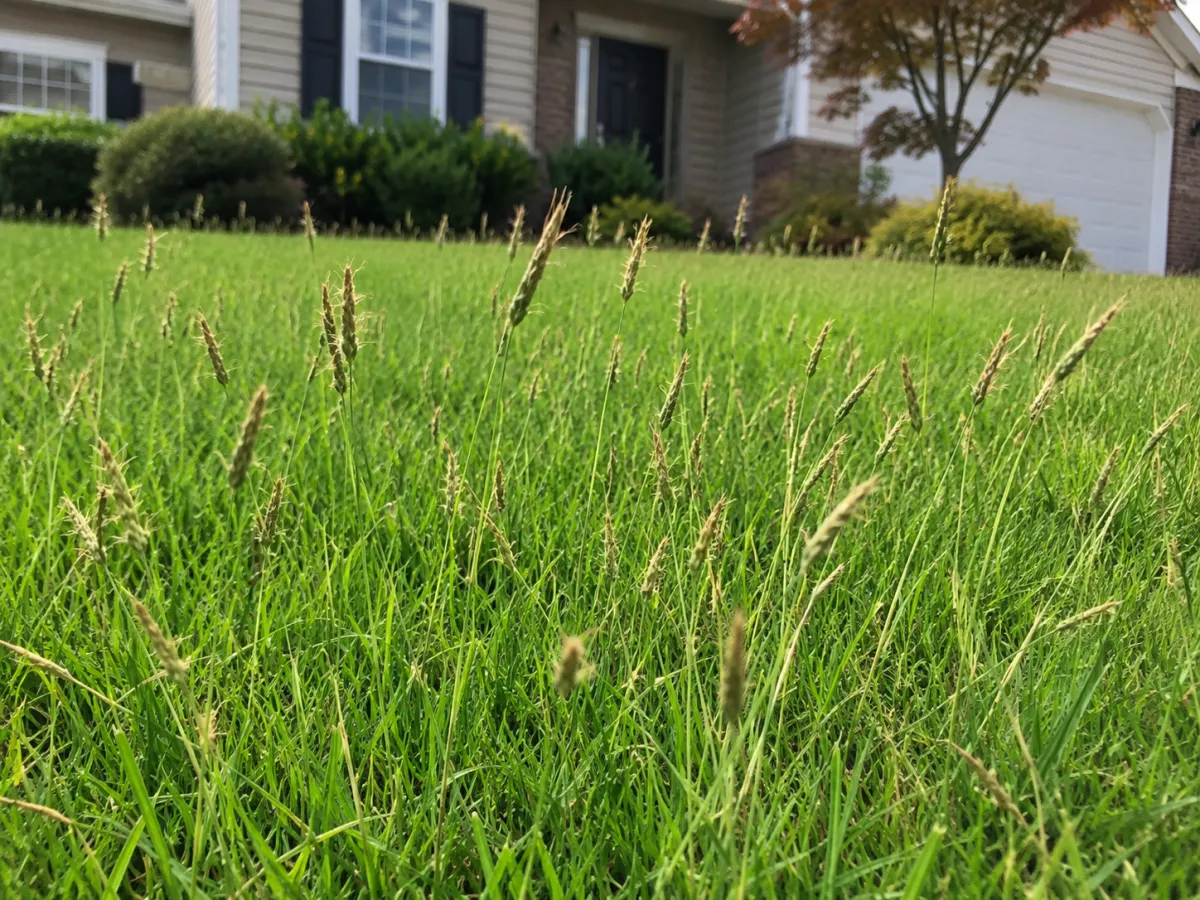
Seeing Seed Heads In Your Lawn? Here's What's Going On.
If the tips of your grass have started to look almost like tiny stalks of wheat, you're seeing seed heads — and you're not alone. Every spring as the days get longer and temperatures climb, cool-season grasses go through a natural reproductive phase and push up seed stalks. It's not a weed. It's not a disease. It's just what healthy turf does this time of year.
Here's how to handle it:
Don't scalp the lawn. Cutting lower won't stop the grass from producing seed heads — it'll just stress the turf right when it's working hardest. Keep your mower at its normal height, typically 3 to 3.5 inches.
Sharpen your mower blades. Seed stalks are tougher and woodier than regular grass blades. A dull blade tears them instead of cutting cleanly, leaving the lawn with a whitish, frayed look the day after you mow. Fresh blades make a big difference right now.
Feed the grass. Producing seed pulls a lot of energy out of the plant. A nitrogen-rich feeding helps the turf stay thick and green through this phase — which is exactly what our Green Choice spring applications are built to do.
Be patient. This usually runs its course over a few weeks, and the lawn goes right back to looking like itself. And don't count on the seed heads to thicken your lawn on their own — between mowing, poor seed-to-soil contact, and timing, very little of it establishes. Thickening comes from healthy roots, proper feeding, and overseeding when needed — not from spring seed heads.
If your lawn looks a little rough for a couple of weeks (including some browning at the tips), that's normal. It's a sign the turf is doing exactly what it's supposed to do.
